
About Us
People
- Home
- About Us
Experts
In developing our initiatives, we have worked together with and sought specific input from subject matter experts.
Some of our experts are listed below:
Prof. Mehmet Asutay
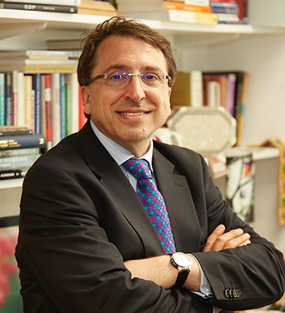
Prof. Mehmet Asutay is a scholar of Islamic political economy, and Islamic moral economy and finance currently serving at Durham University, UK. His academic journey is characterised by exploring and elucidating the field of Islamic economics, not merely as an academic discipline but as a holistic system defined by Islamic ontology.
Prof. Asutay's research interest includes the construction of an Islamic moral economy, which directly impacts resource accessibility and resource distribution and, consequently, the governance system that shapes the accessibility and distribution along with constituting the theory of corporate governance. His scholarship critically examines how the Islamic moral economy diverges from conventional economic systems by emphasising justice, equity, and the welfare of the community over individual gain and profit maximisation. He has disseminated aspects of his research through journal articles, manuscripts and edited books.
Beyond his scholarly contributions, Prof. Asutay's role extends into the institutional realm, where he supports academic institutions and scholars. He also actively engages with policymakers, financial institutions, and community organisations, bridging the gap between theory and practice. His work not only enriches the academic discourse on Islamic economics but also offers practical pathways for realising an economic system that truly embodies the spirit and principles of Islam.
Prof. Asutay holds a Bachelor of Arts in Public Finance from the University of Istanbul, Turkey, and pursued a Master of Science in the same field at the same institution. He has a Postgraduate Diploma in Economic and Social Policy Analysis from the University of York, UK, followed by a Master of Arts in Economics of Public Policy from the Department of Economics at the University of Leicester, UK. He completed his doctoral studies in Political Economics at the University of Leicester, UK.
Salwa Baarma
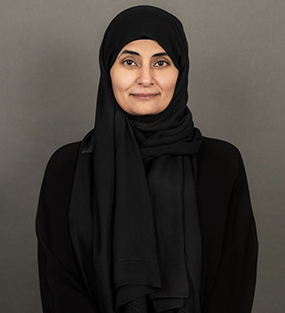
Salwa Baarma is the co-founder and co-director of Qist Initiative, where she spearheads the team in methodology design, structure development, and utilising modelling techniques to foster healthy corporate governance practices, promoting a conducive and thriving working environment within organisations.
Salwa’s experience serving on the boards of multiple organisations in addition to other roles within various organisations, has allowed her a first-hand opportunity to consider best governance practices in different spaces. She has been actively engaged in consultancy, focusing on governance and representation for organisations in the MENA region and non-profit governance and representation in the UK. Her exposure to both Western and Muslim-majority environments has provided her with opportunities to consider different approaches, identify gaps and develop solutions to fill the gaps.
In the pursuit of Ihsan (excellence), her desire rooted in what Islam asks, in seeking what is best, and her conviction in seeking what is required from an Islamic starting point, led her to focus on developing the Islamic Applied Approach. This is an integrated methodological framework for knowledge management, content development and process structure, which she has worked in collaboration with Prof. Mehmet Asutay over the course of its development.
Salwa is known for her determination, dedication, and tireless efforts to work towards bringing issues for discussion and improvement, under the guidance of shariah principles.
Mohamed Chenguiti
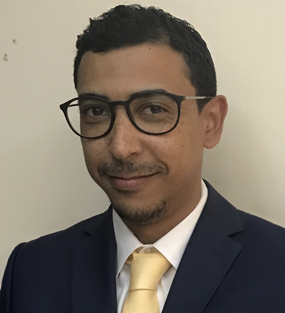
Mohamed is a seasoned professional with 19 years of experience in leadership roles across top-tier international organisations. He brings a wealth of knowledge and a proven track record in advancing innovative solutions for both private and public sector challenges.
Mohamed has dedicated ten years to building cutting-edge data-driven models for decision-making at prestigious investment banks such as JP Morgan and UBS. His expertise in quantitative analysis and model governance has been instrumental in navigating complex financial landscapes and ensuring regulatory compliance.
Transitioning to the public policy arena, Mohamed spent eight years focusing on international development, driving change management, partnership building, and policy innovation. His work with the Islamic Development Bank (IsDB) is particularly notable, where he led transformative projects and advised on sustainable development policies, securing significant partnerships and funding.
Mohamed holds a Master’s in Data, Economics, and Design of Policy from the Massachusetts Institute of Technology (MIT). He also completed advanced studies at the Harvard Kennedy School of Government and has a solid foundation in applied mathematics and computer science from Ecole Nationale des Ponts et Chaussées and Université Paris-Est.
With a passion for leveraging data and rigorous evidence to improve policymaking, Mohamed co-founded a social enterprise focused on integrating data-driven decision-making into public policy. His volunteer work with the Evidence for Policy Innovation Centre (EPIC) further underscores his commitment to impactful change.
Ayşe Nur Tepebaşı
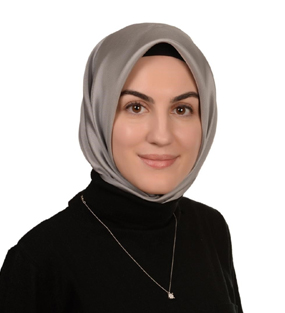
Ayşe Nur Tepebaşı supports the knowledge management activities of Qist Initiative, focusing on research for the improvement of corporate governance models. Prior to this, she was a project manager at the United Nations Development Programme’s Istanbul International Center for Private Sector in Development (UNDP IICPSD), where she led the design and implementation of Islamic finance initiatives.
Previously, Ayşe Nur worked at the Participation Banks Association of Türkiye advising on global developments in Islamic banking and finance, and managing relationships with foreign counterparts. She has further experience in international organisations, including the World Bank’s Global Islamic Finance Development Center, where she worked as a financial sector analyst. In this role, she contributed to developing effective financial sector development projects on Islamic finance, incorporating perspectives on sustainability, SME financing, and long-term investments.
Ayşe Nur holds an MSc in Islamic Finance from Durham University, UK, and dual bachelor's degrees in Business Management and Industrial Engineering.
Abouzaid El Mokrie El Idrissi
BIO TO BE PROVIDED